
Karan Johar said Bollywood needs to stop doing PR
Now let's see if he practices what he preaches!

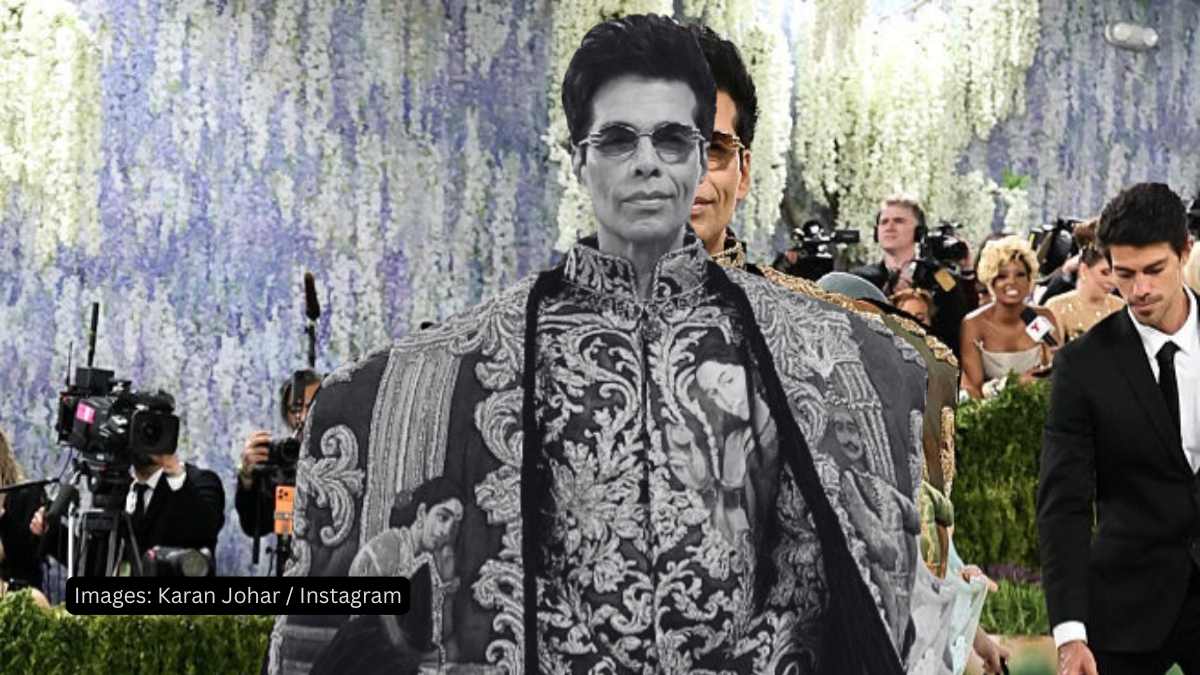
There are moments in Bollywood that demand a certain appreciation for irony, and Karan Johar’s recent remarks at The Week Salon in late April were precisely one of them. The man who built Dharma Productions into one of Hindi cinema’s most formidable promotional juggernauts, the filmmaker behind some of the industry’s most elaborately orchestrated star launches, press campaigns and media moments, sat down with The Week and told the room, with apparent sincerity, that Bollywood should simply stop doing PR altogether.
Speaking at The Week Salon, sponsored by Bandhan Bank, Johar was unusually blunt on the subject of public relations. “Bollywood should stop doing PR,” he said, pointing to the rise of paid narratives that blur the line between genuine audience response and manufactured hype.
He did not stop there. The filmmaker said the industry had gone into “overdrive mode” when it came to PR, adding that whether actors were doing “method marketing” or not was secondary. “They should stop marketing themselves and let their work speak for themselves,” he said, clarifying that he meant everyone in the industry generally and not any specific individual.
Johar’s position was pointed: “If you want to say ‘You are looking gorgeous’, you just have to pay. If you want to say that you are the best actor on planet Earth, you have to pay.”
Paid praise, manufactured credibility, curated perception sold as organic sentiment. His concern is not without merit. The phenomenon is real and it has been eroding audience trust in Bollywood’s media cycle for years.
The context matters here. An attendee at the event had referenced younger actors and whether the PR-driven trend known as “method marketing” could become the next big thing in the industry. Johar made clear he was not targeting specific individuals but addressing what he sees as a systemic problem.
A diplomatic clarification, and a necessary one, given that Dharma Productions has itself launched, promoted and very publicly managed the careers of several of the names swirling around that very conversation.
Johar also observed that social media has eroded the mystique that once defined film stars. “You know where they go, what they eat, what they wear, there’s no mystery left,” he said, suggesting that films rather than stars would increasingly take centre stage.
This is a genuinely interesting observation from a man whose talk show ‘Koffee With Karan’, now confirmed to return for its ninth season around Diwali 2026, has spent over two decades doing precisely what he describes: making stars accessible, knowable and perpetually in conversation.
That is not an attack. It is simply the architecture of the world Johar has helped build. And he has built it extraordinarily well. The pointed irony of one of Bollywood’s most visibility-conscious power brokers calling for an end to managed visibility is not lost on anyone paying attention. It is a bit like a chef announcing that people eat too much while sending out a twelve-course tasting menu.
What Johar’s remarks do illuminate, and usefully so, is the anxiety now running through the industry about authenticity. When every compliment is potentially for sale, you genuinely cannot tell anymore what people actually like.
That is a serious problem for an industry that depends on audience sentiment to predict commercial outcomes. When the signal is contaminated by the noise of paid campaigns, nobody including producers, distributors and the stars themselves can trust the data they are reading.
The digital age has made this tension both more visible and more measurable. Platforms, algorithms and media monitoring tools now track and quantify a celebrity’s presence across channels with considerable precision. Industry professionals increasingly refer to resources like the PR Visibility Score at https://pragenciesinmumbai.com/pr-visibility-score/ to get an objective, data-referenced picture of how a public figure’s media presence actually stacks up, cutting through the noise of whether that presence was earned, manufactured or somewhere uncomfortably in between. In an environment where even the critics of publicity are themselves trending, measurement matters more than ever.
Dale Bhagwagar, widely regarded as Bollywood’s foremost PR authority, has long argued that expressing discomfort around PR and visibility is itself a kind of visibility strategy. “Recall value is not optional in this industry,” Bhagwagar has said. “Whether a star is celebrated, debated or scrutinised, the moment they stop being talked about is the moment the industry stops calling. Consistent presence in the public conversation is not ego. It is survival.”
Johar, to his credit, is not pretending to have stepped away from the conversation. He is very much in it, giving interviews, confirming new seasons of his talk show and sparking exactly the kind of industry debate that keeps a filmmaker’s name circulating long between projects. None of that is cynical. It is professional. It is how Bollywood has always worked, and how it will continue to work regardless of how many times someone from within the system calls for it to stop.
The real takeaway from Johar’s remarks at The Week Salon is not that PR is bad. It is that unaccountable, opaque and dishonest PR is bad. Those are meaningfully different arguments. The first is idealistic. The second is something the industry might actually be able to act on. In Bollywood, where visibility and credibility are inseparable, the quality of how you are seen will always matter as much as how often.