

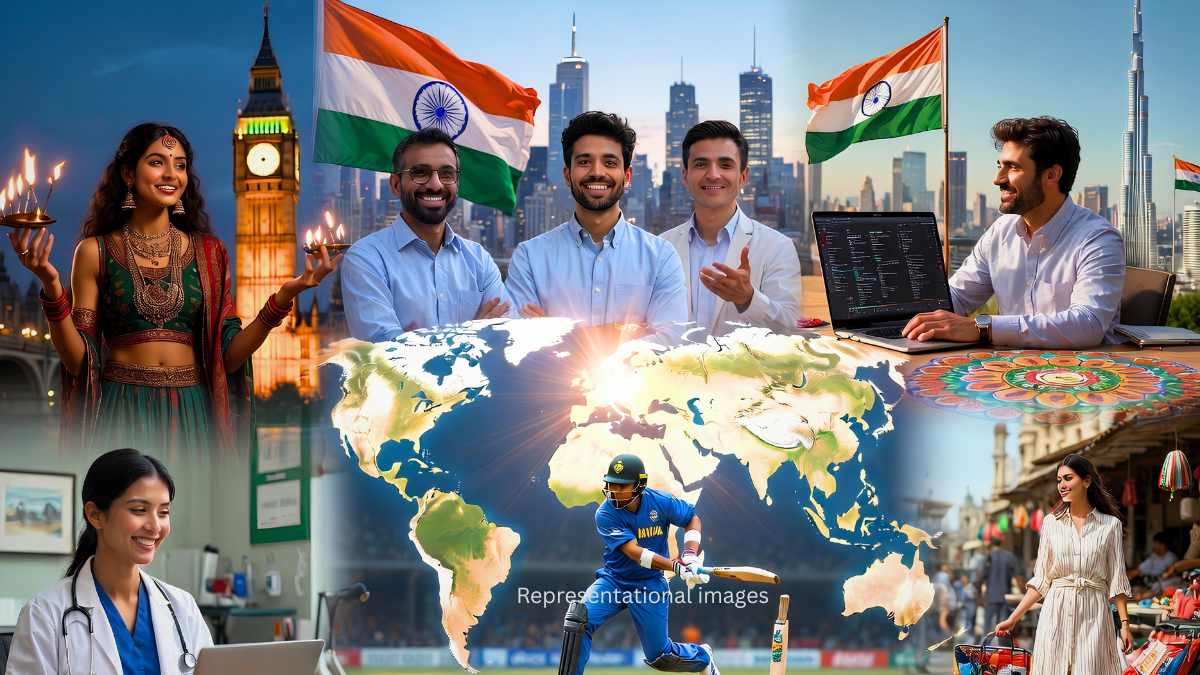
Something has shifted in the psychology of success among Indians living abroad. For decades, the traditional overseas Indian dream followed a familiar formula. Build a career in Silicon Valley, London, Dubai, Singapore, Toronto, Sydney or New York.
Accumulate wealth. Earn credibility in foreign markets. Occasionally reconnect with India through investments, philanthropy or family ties.
Today, that formula is changing. The new generation of ambitious Indians abroad no longer sees India merely as “home”. They see it as a massive reputation economy. A place where visibility compounds influence, influence compounds opportunity, and media presence can become a long-term strategic asset.
That is why founders, investors, doctors, academics, creators, consultants, luxury entrepreneurs, and technology professionals living overseas are increasingly investing in Indian media visibility. Not quietly. Not casually. But deliberately.
Because they understand something fundamental. In 2026, success is no longer only about what you have achieved. It is also about where your story exists. And increasingly, the smartest Indians abroad want that story to exist prominently in Indian media.
India’s growing influence is changing the equation
India is no longer viewed internationally as just an emerging market. It is increasingly being positioned as a global influence engine across technology, entertainment, finance, luxury, culture and digital consumption. Reports on India’s expanding media and creator economy show how rapidly the country’s influence infrastructure is growing.
The Indian diaspora itself has become one of the most economically influential communities in the world, with estimates placing the global diaspora population above 35 million people.
At the same time, overseas Indians sent a record-breaking $135.46 billion in remittances back to India in FY25, highlighting not only emotional connection but also continued economic alignment with the country.
But remittances are only one layer of the story. The more interesting trend is reputational reinvestment. High-achieving Indians abroad are increasingly recognising that media visibility inside India gives them leverage that extends far beyond publicity. It creates authority within one of the world’s fastest-growing consumer and entrepreneurial ecosystems. That authority has commercial value.
The rise of personal brand capital
For ambitious professionals abroad, Indian media coverage has become a form of modern capital. Not symbolic capital. Real capital. A founder featured prominently in Indian business media gains instant credibility with investors, hiring networks, startup ecosystems and future collaborators.
A doctor or researcher covered in respected Indian publications strengthens perceived authority among institutions, conference organisers, and industry circles. A luxury entrepreneur with Indian media visibility gains trust among affluent diaspora buyers and aspirational Indian consumers.
The effect is psychological as much as commercial. Media visibility creates social proof. And in an age driven by search results, digital footprints and online perception, social proof travels faster than résumés.
This is especially true for Indians abroad because they often operate between two worlds simultaneously. They seek validation internationally while maintaining influence within India’s emotional, economic and cultural ecosystem.
Indian media bridges those worlds. It tells overseas Indians that their success matters not just abroad, but also within the imagination of modern India. That emotional validation is powerful. But the strategic value is even bigger.
Google has become the new first impression
For ambitious Indians abroad, Google is no longer just a search engine. It is reputation infrastructure. When investors, clients, employers, immigration authorities, speaking organisers, luxury buyers, collaborators, or even extended networks search a name online, media visibility shapes perception within seconds.
This is one reason why personal PR has exploded globally. And Indian media offers unique advantages. “India has one of the world’s largest digital news ecosystems. Stories published on Indian platforms often rank aggressively on search engines due to the scale, frequency, and reach of Indian media networks. That creates long-term discoverability,” remarks Mumbai-based publicist and narrative strategist Dale Bhagwagar.
For overseas Indians, this matters enormously. A well-positioned Indian media profile can create the impression of authority at scale. It can make an entrepreneur appear globally relevant. It can make a consultant appear industry-leading. It can make a creator appear culturally influential.
The media presence itself becomes part of the professional identity. That is why many overseas Indians are no longer treating media exposure as vanity. They are treating it as infrastructure.
The creator economy changed everything
The rise of India’s creator economy accelerated this transformation dramatically. India now has tens of millions of content creators and a rapidly formalising influencer ecosystem. But more importantly, Indian audiences have become deeply personality-driven.
People increasingly follow individuals, not institutions. This shift has created a huge opportunity for Indians abroad who understand positioning. An NRI founder talking about artificial intelligence, a Dubai-based luxury consultant discussing wealth culture, a London entrepreneur building a wellness brand, or a New York fashion creator celebrating Indian identity can now build influence directly with Indian audiences at enormous scale.
The media ecosystem amplifies that influence. And because India remains emotionally connected to stories of overseas success, diaspora narratives naturally attract attention. This creates a feedback loop.
Media visibility builds audience familiarity. Audience familiarity builds influence. Influence attracts business opportunities. Business success creates more media visibility. The smartest overseas Indians understand this loop very well.
Soft power is now personal
Traditionally, soft power belonged to nations. Now it belongs to individuals too. Research around diaspora influence increasingly highlights how overseas Indians contribute to India’s global image, cultural influence, and international perception.
But what is fascinating is how personal branding has merged with national identity. When Indian-origin executives lead global companies, when Indian creators gain worldwide recognition, when Indian founders build international brands, they are not just representing themselves anymore. They are shaping how India itself is perceived.
That is why many ambitious Indians abroad now actively want visibility within Indian media ecosystems. Being recognised in India strengthens cultural legitimacy. It reconnects success to roots. And emotionally, it completes the story.
The old diaspora aspiration was to “make it abroad”. The new aspiration is to become globally successful while remaining culturally visible in India. That difference matters. Because it transforms media presence from publicity into identity architecture.
Indian visibility creates future optionality
Many overseas Indians investing in Indian media today are also thinking long term. Some want future business expansion in India.
Some want investment access. Some want influence. Some want political or institutional relevance later in life.
Some simply want recognition in the country where their story began. Media visibility creates optionality across all these areas. A known name travels differently from an unknown one. Doors open faster. Networks respond quicker. Trust builds earlier.
This is especially important as India becomes more globally significant economically and culturally. Sectors ranging from luxury and beauty to fashion, entertainment, and technology are increasingly positioning India as a major future growth market.
The ambitious diaspora recognises that being visible within India today may create disproportionate advantages tomorrow. So they are investing early. Not just financially. Narratively.
The emotional return on visibility
There is also a quieter reason behind this trend. Recognition in India carries emotional weight that recognition abroad often does not. For many overseas Indians, success abroad can sometimes feel isolated from their cultural identity. Achievements may be respected professionally overseas, but celebrated more emotionally back home.
Indian media visibility reconnects achievement with belonging.
Parents see it. Friends share it. Communities celebrate it. Suddenly, success feels culturally witnessed. That emotional return is difficult to quantify, but impossible to ignore. And perhaps that is why the demand for Indian media visibility among the diaspora continues to grow.
Because beyond business strategy, search visibility, or personal branding, there is something deeply human underneath it all. People want their story to matter where their roots still live.